Given the root of a binary tree, return the maximum path sum.
For this problem, a path is defined as any node sequence from some starting node to any node in the tree along the parent-child connections. The path must contain at least one node and does not need to go through the root.
Example 1:
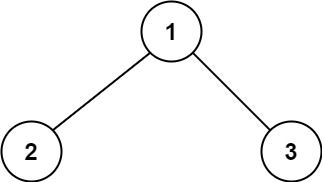
Input: root = [1,2,3]
Output: 6
Example 2:
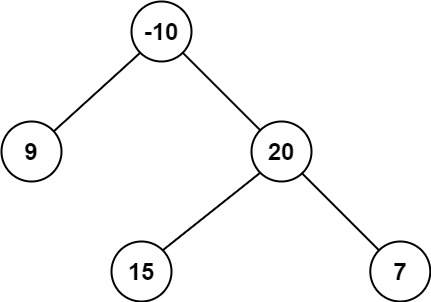
Input: root = [-10,9,20,null,null,15,7]
Output: 42
想法: 這題直接用遞迴從左右子樹分別找出左右子樹的最大值,然後再看看當前的 node 的 val 是否大於 0,若大於 0 則加上當前 node 的 val。
完整程式碼:class Solution {
public:
int max_sum;
int dfs(TreeNode* root) {
if (root == nullptr) { return 0; }
int left_sum = max(dfs(root->left), 0);
int right_sum = max(dfs(root->right), 0);
max_sum = max(max_sum, left_sum + right_sum + root->val);
return max(left_sum, right_sum) + root->val;
}
int maxPathSum(TreeNode* root) {
max_sum = INT_MIN;
dfs(root);
return max_sum;
}
};

沒有留言:
張貼留言